Monday, November 2, 2015

GHWP Live Tweet November 2015 Tuesday Movie Line Up & New Friday Time

     With Spectreman behind me, I'm looking to the horizon for... something to do. For what the show offered in entertainment and zany dubbing, I'm not sure I can top it on Friday nights, but I'll try. It was sad to give our cyborg hero and his space ape enemies a final sendoff, but a soft spot in my heart has chosen to believe that Dr. Gori and Karas escaped their fate and opened a little bed and breakfast in Indiana.

Throw pillows, Karas! Just think of what my ultimate genius can do with throw pillows!
     The Japanese Wikipedia page for Spectreman had an interesting notation on Gori and Karas, labeling them as having a master-slave relationship so strong that they couldn't live without each other. The final episode came off as a little anti-climactic, but after looking at the show from this angle, it strengthens my belief that Gori and Karas were perhaps the most unique villains in any Japanese superhero show.

"Why did you save me, master?"              "... because you complete me."

     #GHWP Tuesday Movie Line Up for November 2015: 

                    November 3 - Terror Train

    On November 3, it's like Halloween never ended with one of my all time favorites, Terror Train. An early 1980s slasher, Terror Train got its hands on Jamie Lee Curtis just before slasher movies became cliche and Curtis moved on to other roles. It didn't take long after Halloween for that to happen, but Curtis would squeeze four horror roles in between her career as Laurie Strode in the first two Halloween films before moving on to other genres: The Fog, Prom Night, Terror Train, and the amazing Australian-produced film Roadgames (co-starring Stacy Keach). Terror Train, produced in Canada in 1980, is standard slasher fare and was not highly acclaimed, but it does have the significance of being one of the first horror movies I ever saw as a child. It's become a habit for me to repeat the statement that "I first saw this movie at the age of four," and that is turning out to apply to a lot of movies. I might have seen it at age two when it premiered because my parents, being movie nuts and having a child born knowing to shut the hell up in a movie theater, took me with them to movies all the time, but my memories of it are, like many movies, cemented in that age four bracket of 1982 when my family first decided to get premium cable. For me, the draw was not only Halloween's Jamie Lee Curtis but also celebrity magician David Copperfield, making his first feature film appearance in Terror Train and his only film acting credits outside of his many illusionist television specials in which he did not play himself (but let's face it... he really was playing himself in Terror Train anyway).
     The story revolves around a pre-med school prank gone horribly wrong. Curtis' character reluctantly takes part in luring a fraternity pledge named Kenny Hampson into a dark room for a romantic interlude, but Kenny unwittingly gets into bed with a woman's corpse. I guess pranking friends with cadavers is the logical equivalent of dentists having Nitrous oxide parties. Kenny suffers a complete mental breakdown from the experience and is institutionalized, and the story cuts to three years later as the people responsible begin to drop off one by one during a train-chartered New Year's costume party.

Watch my film career closely. Now you see me. Now you don't. Mindfreak!

      November 10 - Android Kikaider (1972) episode 1 and Mechanical Violator Hakaider (1995)

     Tuesday night, November 10, we go back to Japan for a special Keita Amemiya-themed movie and a show with the first episode of the 1972 Japanese superhero series Jinzou Ningen Kikaider and the 1995 film starring a former Kikaider villain elevated to the role of anti-hero in Mechanical Violator Hakaider. Created by one of the fathers of Japanese manga superheroes Shotaro Ishinomori, Kikaider is the story of an android's struggle against evil to protect his creator and his family. Kikaider and Hakaider might seem more familiar to some from their recent appearances in an anime series as well as a new 2015 film called Kikaider: ReBoot. Hakaider would show up in the 1972 series as a major enemy in the story, but action/sci-fi director Keita Amemiya had something different in mind for Hakaider's starring film role. Amemiya cut his teeth in tokusatsu with Toei in the 1980s with a number of Super Sentai and Kamen Rider series, and he made the transition into feature films in 1988 with Mirai Ninja. Amemiya would go on to produce the successful live action adaptation of Zeiram and its sequel as well as the underrated Moon of Tao: Makaraga.
     Mechanical Violator Hakaider, released in 1995, is a post-apocalyptic tale sure to make any religious studies major question his/her life choices. This world of the future focuses on Jesus Town, a Utopian city ruled by the supposed holy angel Gurjev and his android right hand Mikhail. Suffering from a fragmented memory and rumored to be a prophesied dark savior of the people, Hakaider is released from a centuries-old prison and cuts a path through Jesus Town straight to Gurjev's doorstep.

I am the law... I think. I'm fuzzy on the details, so I'll just shoot everyone until I figure it out.

               November 17 - Alfred Hitchcock's Notorious (1946) (my contribution to #noirvember)

      Yes, Alfred Hitchcock's Notorious. With all the flashy costumes and giant monsters and talking eyeballs, you didn't think I liked "good" movies, did you? I like a little bit of everything, but it wasn't until recently that I took part in enjoying some of the classics with #TCMParty. It was that little Twitter social group that drew me to Twitter again after several years when I saw a few of them showcasing their favorites on a Turner Classic Movies fan favorite Saturday matinee. Before I knew it, a new door opened up to enjoying both ends of the movie spectrum. I love every aspect of movies, but older dramas and thrillers are somewhat new territory for me. As a kid, I loved black and white movies and television, but my experiences were limited mostly to comedies like The Three Stooges, nearly the entire catalog of Abbott & Costello films, and horror/sci-fi like Frankenstein and THEM! I had to grow up and develop a little more maturity and sophistication before I could watch the likes of The Stranger, the first black and white drama I ever watched with any attention span courtesy of an old double feature VHS set with The Trial. I would follow this up a few years later with Touch of Evil after its first DVD release coincided with a heavy focus on the film in a film literature class I took in college, but I soon found myself swept away from the genre again as I developed tastes in more Japanese films by Akira Kurosawa and Italian westerns by Sergio Leone. Old time radio dramas from the 1940s were my true first love of drama, and it took me a little while to move from the stories of The Shadow and Boston Blackie to screen drama with Whatever Happened to Baby Jane?, Hush... Hush, Sweet Charlotte, Shadow of a Doubt, Casablanca, Attack, Key Largo, Suddenly Last Summer, Gaslight, and Laura, just to name a few (but the list is still pretty short). I still have not seen most of the real classics, and part of my reason for picking Notorious is that this will be my first viewing of it. I have seen a number of Hitchcock films, but, in my entire life, I haven't seen a Cary Grant film. Not a single one. I'd never heard of #noirvember until just a day before this writing, so it's serendipity that I already had this one in mind months in advance. I had hoped it might be on TCM's schedule sometime, but this offers a better guarantee that I don't just push it to the back of my DVR list and accidentally delete it again before getting to watch it. My DVR is always full to bursting with movies from TCM, but I seldom get around to watching any of them. I run out of time and space too quickly, and I end up making a note of film titles in a list that never stops expanding. I only know the basic plot of Notorious, so I'll leave it up to you and Google to find out more about it if you wish. It's classic Hitchcock, Cary Grant, Ingrid Bergman and Claude Rains, and I have no doubt it is an amazing film. But of course this is a riffing group, and I don't hesitate to pick even the best movies apart piece by piece to heighten my enjoyment.

For this, however, I have no comment other than "Awwwwww."

                    November 24 - Mega Monster Battle - Ultra Galaxy Legend The Movie

     And directly from Hitchcock majesty, we go immediately back to men in rubber suits.

    I would like to take this time to offer a disclaimer. The word "Ultra" appears several times from this point, so I highly recommend you avoid using it as a drinking game word. I take no responsibility for any alcohol poisoning that may result from ignoring my warning.

    Ultra Galaxy Mega Monster Battle was the unique 24th entry in the Ultraman franchise in 2007. Rather than introduce a new Ultraman, Ultra Galaxy focused on an amnesiac man named Rei. He joins a mining expedition crew known as ZAP SPACY, and their travels through space bring them into a number of encounters with giant monsters on numerous planets. Rei, however, has a trick up his sleeve in the form of the Battle Nizer, a mystical device that summons giant monsters from thin air to fight his battles for him, but before you start shouting, "that sounds too much like Pokemon," remember one important detail: the Pokemon franchise might not exist today if not for the inspiration of "Capsule Monsters" introduced in Ultraseven way back in 1967. The Ultra Galaxy series put the monster summoning at the forefront of the plot, digging into its classic catalog of monsters from past Ultraman shows and reviving them for new stories. One kaiju that would find a place on the side of heroes was Gomora, an ancient Earth dinosaur species and the first giant monster to fight the original Ultraman to a standstill in 1966, and he cemented a new role as an ally of justice after years of appearances as one of the Ultra family's most popular adversaries.
     After Rei regained his memory and learned of his alien heritage (he was not a member of the Ultra family but a similar alien race called the Reionyx), Tsuburaya decided to create a story that would tie together all of the past aspects of their Ultra franchises and offer an explanation of some of the Ultra universe's theology with the revelation of the Monster Graveyard, a dimensional warp in time and space that serves as the final resting place for all of the giant monsters, aliens and even Ultramen that have fallen in battle in multiple parallel worlds. The Graveyard had been mentioned several times in past series, but this film expanded upon it as a crucial plot setting. The Ultra series of the late 90s (Ultraman Tiga, Dyna, and Gaia, respectively) took place in a parallel universe, and the same was true for Ultraman The Next and its television sequel Ultraman Nexus. Ultra Galaxy Legend The Movie also introduced the first evil Ultraman, Belial, who escapes his ancient prison and seeks to lay waste to the Ultraman home planet of M-78 and take over the universe with an army of one hundred monsters from the Graveyard. Virtually every member of the Ultra series is incorporated into the story including the Ultramen of the parallel 1990s universe, the 1987 animated Hanna Barbera Ultramen (from Ultraman: The Adventure Begins), Ultraman Great (from Australia's Ultraman: Towards The Future), Ultraman Powered (from the USA's Ultraman The Ultimate Hero - see new Friday details below), and the former anniversary spoof hero and "runt of the litter" Ultraman Zearth, and the film was notable for introducing the impetuous son of Ultraseven, Ultraman Zero. Mega Monster Battle - Ultra Galaxy Legend The Movie was designed to appeal to Ultra franchise fans of all ages. Anyone unfamiliar with the Ultra series might want to do a little homework because they threw all of it into a blender and hit puree, but I would like to hope that some of the time I have taken to familiarize my audience with the series will have paid off by the time this film is featured.


Join me on the dark side, Luke, er... Ultraman Zero.


                    New Friday Schedule starting November 6, 2015, 10PM EST
 
      Starting Friday night on, November 6, 2015, at a new earlier time, 10PM EST in between #Kolchak and #bmoviemaniacs, the henshin (transforming) hero adventures travel a new path to some obscure corners of the Ultraman universe, and we're going to Japan by way of Hollywood for a little while. Hollywood adaptations of foreign franchises generally are not considered happy occurrences. The notion of live action American versions of stories like Akira and Ghost in the Shell personally make me cringe, and we already have a decent list of horrors with movie adaptations of Japanese video game franchises such as  Street Fighter, Resident Evil and even Super Mario Brothers. One particular Japanese franchise, however, managed to achieve a decent level of success, Toei's Super Sentai franchise which, when licensed to Saban in the early 1990s, became known as the Mighty Morphin Power Rangers.
     With any successful product, everyone else wanted to get into the act. The USA Network cranked out its own Tattooed Teenage Alien Fighters from Beverly Hills, UPN got its hands on the digital world Japanese superhero Denko Choujin Gridman and adapted it into Superhuman Samurai Syber-Squad with Tim Curry as the voice of the lead villain. Saban tried their hands at off more Toei franchises with Masked Rider (Kamen Rider), Big Bad Beetleborgs (Juukou B-Fighter), and VR Troopers (a stock footage mishmash of Uchu Keiji Shaider, Choujinki Metalder, and Jikuu Senshi Spielban) as well as a few original series such as The Mystic Knights of Tir Na Nog.
     As most of these shows would reveal, the concept of live action Japanese superheroes was best left to the originators. Before Power Rangers achieved its fame, however, Tsuburaya Productions decided to cross the ocean to co-produce a new Ultraman series in Hollywood following the American reception of the Australian-produced Ultraman: Towards The Future (known in Japan as Ultraman Great), which some could argue was a logical inspiration for Saban to grab up the Super Sentai franchise. Towards The Future had notable exposure in the US with a line of Dreamworks toys, home video releases, television broadcasts, and one of the first video games released for the domestic Super Nintendo Entertainment System. Teaming with an American production company called Major Havoc Entertainment, Tsuburaya produced the 13-episode English-language series Ultraman: The Ultimate Hero (known in Japan as Ultraman Powered).
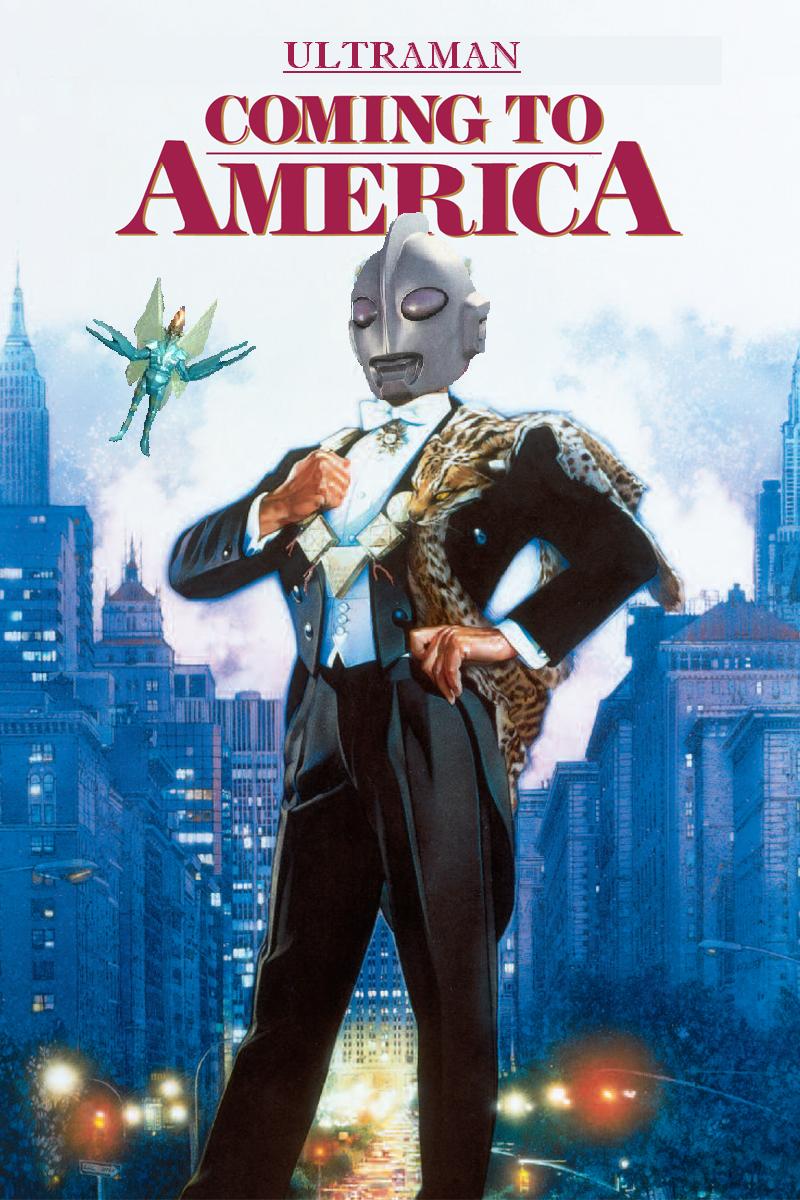
We've got Hollywood behind us. What could go wrong?
     What? You never heard of it? Well, there's an explanation for that. Despite its roots, Ultraman: The Ultimate Hero never aired in America. Although it did broadcast in Japan, the entire project was considered less than a success due to delicate costume construction that forced action scenes to be toned down ("Made in USA" isn't what it's cracked up to be when it comes to Japanese products), and it would be three years before Tsuburaya would revive their own Ultra series for a new generation with Ultraman Tiga.
     Ultraman: The Ultimate Hero focuses on the members of the WINR (Worldwide Investigation Network Response) as they try to protect the Earth from the invasion of the Baltans (an insectoid alien race resembling cicadas). A number of classic Ultra series kaiju are summoned by the Baltans (classic Ultra foes themselves) including the ancient space dinosaur responsible for defeating the original Ultraman, the monster Zetton. The human race has renewed hope when Ultraman Powered (voiced by renowned Japanese martial arts actor Sho Kosugi) forms a bond with WINR member Ken'Ichi Kai (played by Sho Kosugi's son and veteran stunt actor Kane Kosugi) to transform and combat the alien threat.
     Depending on the reaction to this series, I will be sprinkling in a few other odds and ends or possibly shifting gears to something else entirely. Hopefully this will be enough to fill the void Spectreman left behind just a little. I know nothing will fill it completely.

    #GHWP kicks off a new post-Spectreman journey on Friday, Nov. 6, 2015, with the first two episodes of Ultraman: The Ultimate Hero at 10PM EST following #Kolchak on Twitter. Don't forget the new earlier time.

Saturday, October 24, 2015

GHWP Live Tweet Oct. 27 - Halloween Bookends Week 1 - Girls Nite Out

     Non-sequitur #1: As I write this, I have just learned of the passing of the great Maureen O'Hara. She will be missed greatly, and at least three of my favorite movies (The Quiet Man, McLintock!, and Only The Lonely) likely would not be favorites at all if not for her talent.

     Non-sequitur #2: I lost sleep over the Spectreman finale. I must have tossed and turned in bed for two hours with the whole thing hazily repeating itself in my mind. Being on the edge of a dream state, it felt like a lot of other difficult life experiences were intertwined with it, so it was hard to let it go. It was a somber and rather quiet occasion, and a couple of people couldn't bear to stick around to see it end. I almost regret featuring the final episode at all, but we had to push through and get past it. It gave me some insight into the characters that I'm not sure was discussed in past live tweets or even fan discussions of the series elsewhere, and I think some of those conversations will come up when I start live tweeting the series all over again. I will live tweet the series again, but I'm going to let it have some time and rest. Depending on where life takes me in the next year, I'd say to keep an eye out for May 2016, the first anniversary of GHWP, to take the journey again. In the meantime, there will be a Halloween Spectreman special on October 30 as well as a New Year's tribute.

    Now on with the scares. Back in May 2015 when GHWP was just starting out and before Spectreman helped me get my foot in the door and draw an audience, I tried my hand at hosting a few random movies here and there, always falling somehow on mutant fish and killer shark movies such as Bruno Mattei's Cruel Jaws and Roger Corman's Screamers. When I hosted Mako: Jaws of Death, I opted for an obscure choice with a 1987 USA Network broadcast version hosted by the great Commander USA. The original 80s commercials turned out to be a bigger hit with the crowd than the movie itself. A number of trailers for USA Network and theatrical premieres stood out, and one of them was for our first Halloween bookend pick. On Tuesday night, October 27, 2015, at 10PM EST, GHWP presents the 1982 college slasher Girls Nite Out.


     Originally filmed as The Scaremaker, the film wasn't released until two years later in 1984 after receiving a new distribution title. Hal Holbrook pops up fresh off the set of Creepshow for the first feature film role of his son David Holbrook (who would go on to have a role in Creepshow 2).

No, I will not say the "Billy" line again. I've moved on, and so should you.
     If you know slasher movies, then you have a pretty good idea of what's going to happen. A bunch of young people are going to be offed one by one, and this time around, it's a killer in a bear mascot costume doing the dirty deed.

Oops. Sorry. Wrong killer bear mascot photo.

     Starting at 8PM EST Tuesday night, October 27, 2015, #TrashTue will be presenting Texas Chainsaw Massacre 2. Then, stick around with #GHWP at 10PM EST for Girls Nite Out.


     Write-up to come for the second Halloween bookend feature for November 3, Terror Train. One of my all time favorites.

Tuesday, October 20, 2015

GHWP Live Tweet Oct. 23, 2015 - Spectreman Finale

     I have Rod Stewart's "Faith of the Heart" playing in the back of my mind as I write this, and I must confess I'm welling up just a little. Full disclosure: before I began these live tweets of Spectreman, I had not seen beyond episode 24. That's right, folks. For all of you journeying through the show for the first time, I was on that same journey with you. You and I both will be watching the final episode of Spectreman together for the first time, and it might have an impact on my delivery of witty high comedy.
     When I was five years old, Spectreman was on the tail end of its 5-year syndication run, and I only saw a few episodes after Kindergarten before it went off the air. I never forgot it, and I was fortunate enough to find a few VHS releases at local video rental stores through my childhood until I finally managed to get my hands on those first 24 VHS episodes in my early 20s. I knew those stories well, but traffic monster Kuruma-Nikuras was the end point for me in Spectreman's adventures because I didn't have access to the complete series until about seven years ago. Even then, I didn't really get beyond those first 24. I read a little about the episodes to follow and saw a lot of pictures of monsters and stories, but part of me didn't want to see it end. I knew inevitably that Dr. Gori would be defeated and that Spectreman would bid farewell to the Earth someday, but I didn't expect to reach that point in this manner.
     Live tweeting Spectreman has been an uplifting experience for me. Enjoying the shows and laughing with others' observations pumped some much-needed positive thinking into me, and it renewed a childhood joy that I had all but abandoned during several years of depression and family difficulties. As much as I owe the origins of that youthful happiness to the likes of Godzilla, Gamera, Ultraman and Jet Jaguar, the real credit for that first exposure to wonder belongs to George, Dr. Gori, Karas and Spectreman. On the creative side, I owe the same thanks to Mel Welles, who never expected that the English dub project he supervised would have had as much of an effect on anyone as it did on me. On the riffing side, I have to thank #DriveInMob. It was their live tweets of P Productions' Spectreman predecessor The Space Giants that put me in the mood to look at Spectreman's adventures again, and I didn't want to do it alone. I'm glad I didn't have to, and I'm thankful for the dozen or so people that have been with me almost every week since episode 1 as well as reruns of the first one-third of the series (and four or five people who have never missed a single live tweet). I also can't offer enough thanks to the OnlineFilmCollection for uploading the entire series to YouTube. For anyone reading this that has not seen the Spectreman series and wants to do so, that is your best source (except for the case of episodes 5 and 44, which require alternate viewing methods). Unfortunately, Spectreman may never get a restored DVD release with subtitles let alone its original English dubbed version. Spectreman has achieved cult status all over the world, with some of his greatest and most dedicated non-Japanese fans coming out of France, Brazil, and the United States, and it was those late 70s/early 80s syndication years that cemented him in our minds forever. And now... on with the show.

Episode Selections:
61 - The Terrifying Monster Show
62 - This Is It - Gori's Final Death-Match
63 - Goodbye Spectreman

     Single-episode stories in Spectreman were a rarity. In fact, episode 61 is one of only three single-episode stories in the entire series. Serving as a retrospective, the story flashes back to George's past experiences with Dr. Gori's schemes and monsters as he investigates an alien invasion hiding in plain sight at a local carnival. A race of former galactic slaves decided to focus their efforts to serving their new master Dr. Gori (I think they missed the point of being free from slavery), and they infiltrate a popular children's monster stage show. Their sinister plan? To lure humans into a transformation chamber-- disguised as an innocent carnival attraction-- and turn them into monsters.

Go on in, kid. We have liability insurance.

     While George and a crowd of children enjoy a live stage show recycling some of the monster suits from past episodes, the aliens succeed in turning a young boy into a chicken monster and blackmail him into breaking up the stage show and attacking the crowd. After putting the hurt on the entire squad of G-Men (including Otto... yay), the chicken monster convinces everyone that this isn't all part of the show, and the alien invaders reveal themselves. George and his friends are captured, but the chicken monster is still just a little human boy at heart and wants his normal life back.

Thank you for not killing me indiscriminately, Spectreman.

     After the circus ends, Dr. Gori is at the end of his rope. In past preview blogs, I have provided a preview synopsis of the story, but I'm not doing that this time. That would force me to skim through the episode and spoil it for myself, and I don't want that Baby Ruth in my swimming pool. Dr. Gori is out of monsters and out of alien allies willing to aid him in his conquest of the Earth. For all his genius, his track record is no different than any other alien invader in a Japanese superhero television series, but he has one final experiment up his sleeve that will combine all of his past failures into what he believes will be an ultimate success.

A fancy lab coat and big science goggles! This is serious!
    
     #GHWP faces Dr. Gori's final assault and Spectreman's spectacular farewell this Friday night, October 23, 2015, at 1AM EST. The story might be coming to an end, but the memory will live on. And if you missed out on the experience the first time, then don't worry. Spectreman live tweets with #GHWP aren't dead. On October 30, we revisit the weirdest Spectreman story for Halloween with the alien vampire Kyudora, and Spectreman returns on New Year's with a special tribute live tweet.

Thursday, October 15, 2015

GHWP Live Tweet Oct. 16, 2015 - Spectreman

     The final five are upon us. This week, Dr. Gori is almost out of ideas, out of monsters, and out of genius plans to take over the Earth. Before he embarks on his final assault against Spectreman, the mutant genius of Planet E has one more ally from the depths of space.

Episodes:
59 - Alien Genos: The Messenger from Hell
60 - Deadly Dance of the Monster Dokuron

      Hailing from the Planet Genos, an emissary that sounds a lot like Edward Everett Horton arrives in a pick-up truck (?) to discuss a new plan for world conquest with Dr. Gori: Operation Genocide.


     When Dr. Gori asks for a demonstration, the swashbuckling Genosian is happy to oblige... by killing Karas! The Genos alien runs Karas through with his sword, and Karas falls lifeless to the ground. But before Dr. Gori can take his revenge, the Genosian proclaims that he can bring Karas back from the dead. Pouring a special formula through the hollow center of his sword's blade, he revives Karas, but Dr. Gori doesn't have time to celebrate. The Genos formula has turned Karas into a mindless killer who only obeys the Genosian's orders, and Karas assaults his former master with blood lust. The Genos alien calls Karas off, and Dr. Gori seems more than willing to lose the obedience of his most faithful servant in exchange for a plan that will bring him closer to his goals. So much for loyalty.
     Meanwhile, a young psychic boy named Johnny has a premonition of the coming threat, but only George is willing to listen to his worries. The Genosian and Dr. Gori begin to infect people with the berserker formula to create an army of mindless killers, and Gori ups the ante by raising a demonic monster from the dead with the same formula: the skeletal beast Dokuron.


     Will Karas come to his senses and serve his idol and master once again? How will George fare when he falls into Dr. Gori's torturous clutches, and how can Spectreman kill a monster that's already dead? Is one little psychic boy enough to tip the scales of justice in the cyborg hero's favor and put a stop to Operation Genocide for good? Tune in to the #GHWP hashtag on Twitter at 1AM EST Friday night, October 16, to find out what happens.

Next Friday, October 23, #GHWP will be here for the final first-run Spectreman live tweet with the final three episodes of the series.

Monday, October 12, 2015

Spectreman Comics (French to English Translations)

     First off, I want to give the warmest thanks to the efforts of French Spectreman fan and blogger Ludosan13 for his page Les Intercalaires Nucleaires.  As much as I love Spectreman, I've never taken the efforts to preserve all of that information on a blog like he/she has done. Whether or not you speak French, that page is amazing, and I recommend paying it a visit especially if you follow along with my blog from time to time. If not for the collected information and trivia posted there, some of the material I am posting here would not be possible.

     From what I could glean in the limited research available, a French publication produced these Spectreman comics in 1979, one year after the series began its syndication in the US. Spectreman was dubbed and syndicated in several other countries including France and Brazil, where it seems to have had its greatest impact outside of Japan. Brazil produced a very large number of Spectreman comics, many of which can be found on Ludosan13's blog, but unfortunately I don't speak Portugese to create English translations for those. I do, however, have some limited French background, so I've taken it upon myself to start translating the French Spectreman comics into English a little bit at a time.
     My French is a little rusty, but with a little additional assistance from a French-English dictionary and Google Translate, I've come up with what I believe are faithful translations of the original French text. As I went through a number of lines, I discovered that the stories were written rather simplistically, and I took liberties in a few spots to make them sound more like what I imagine the dialogue would have been on an actual episode of the show. I had some trouble in a few spots because literal translations don't sound exactly as they should in English, so I added or altered a few words so that they would both make sense and not always sound so simple and matter-of-fact. It may be just my personal opinion that the writing felt a little bland and lifeless compared to the action on the page, and I tried to balance them out a little more. The resulting English text is translated almost 100% literally, and the majority of tweaks to the dialogue were made with synonyms, rearranging a few sentences, and adding a few words here and there to display emotion.
     Interesting to note is the female member of the Pollution Squad in this story, named Nakaya. Unless I've made a mistake in research, none of the ladies that appeared on the series in Japan used that name, so this appears to be yet another member of the revolving roster of G-Women. Her artist rendering also does not resemble any of the ladies from the series, so I treated her as a new character and kept her name from the French text intact. No other names have been changed in the translation, either, except for Karas. In French, his name was spelled Carasse, and I changed it to the English spelling to avoid confusion. This forced me to make one artistic little change on one page when George shouts his name, and I think it worked out well. I did, not, however, make any changes to the action words elsewhere, so just remember that when someone looks like they are shouting, "Noon!" they are shouting, "Nooo!" I considered changing Nikki to Nicholas, but I had enough difficulty trying to get the text to fit properly and still be as faithful as possible to the original.
     So, without further ado, here is the Son of Karas' AKA The QuandaryMan's first attempt at scanlation with "Spectreman - A Child Like the Others." Enjoy!


Sunday, October 11, 2015

GHWP Live Tweet Tuesday Oct. 13, 2015 - Salute to Ultraman

     Before there was Spectreman or Jet Jaguar, there was Ultraman. I have my doubts that anyone that has or hasn't read my past blogs doesn't already know who Ultraman is, and this little live tweet event is set up to pay a roasting and riffing tribute to the giant hero that started it all. This is also a little introductory journey into the post-Spectreman days of GHWP that are on the horizon. The GHWP Spectreman finale will live tweet on Friday, October 23, with the final three episodes of the series, and, following a Halloween encore of the alien vampire Kyudora episodes on October 30, Spectreman will bid farewell to the schedule to make way for Ulysses 31 and the obscure English-produced Ultra series Ultraman Towards The Future and Ultraman: The Ultimate Hero.

     When Godzilla designer Eiji Tsuburaya made the legendary decision to transition his giant monster effects from the big screen to the small screen and start Tsuburaya Productions, the impact on television history was widespread. I can't tell the story better than one of the top experts himself. For more information on the history and legacy of Tsuburaya, I would recommend picking up the book Eiji Tsuburaya: Master of Monsters by August Ragone. August is the authority I could have been if I had more confidence and less distraction from focus, but c'est la vie. The best I can do is show my own little style of appreciation for something that had a lasting effect on my life from early childhood.
     Tsuburaya would begin his television career with the successful Ultra Q, a series very similar in tone to The Twilight Zone and The Outer Limits but with the signature style of giant monsters from myths and outer space. The following year, history would take a sharp turn when simple human confrontation with giant monsters wasn't enough, and the world needed a hero. The call was answered from M-78, and Ultraman was born.


     I have to admit that Ultraman was totally unfamiliar to me for most of my young life. As my blog readers and riffing acquaintances know, my first exposure to Japanese superheroes was Spectreman, which was on the last leg of its 5-year English syndication run when I was in Kindergarten in 1983. I had seen my first few Godzilla movies shortly before discovering Spectreman on what would become the local CW affiliate, Houston's Channel 39, and I was heartbroken to come home one day from school to find out that the show had gone off the air for good before I had the chance to see more than a handful of episodes. Ultraman was nowhere to be found in reruns during my childhood, and I had no inkling of the Ultra franchise at all until 1996, when I saw the third entry, Ultra Seven, on TNT late one night after Monstervision with Joe Bob Briggs. I was just out of high school and starting to earn a little of my own money for the first time, and Ultra Seven came into my life at the same opportune moment I was getting to see a lot more Japanese monster movies for the first time courtesy of mail-order fan-subtitled VHS, but I still had no real exposure to the first Ultraman, often referred to as Ultraman Hayata.
     Hayata needed some distinctive identification eventually because the Ultraman family exploded. Since 1965, there have been almost 30 Ultra series and a large number of theatrical and made-for-television movies expanding upon the heroic beings of M-78, and the franchise is still going strong. In 1990, a unique English-language incarnation came out of Australia in the form of Ultraman: Towards The Future (known in Japan as Ultraman Great), which aired in the United States in 1992 shortly before the popularity explosion of the Mighty Morphin Power Rangers. This version of Ultraman would go on to be one of the first video games ever released in the US for the Super Nintendo Entertainment System upon its launch. In 1993, Hollywood tried to get into the act with Ultraman: The Ultimate Hero (Ultraman Powered in Japan), but the American-produced series, with famed actor Sho Kosugi as the voice of Ultraman, never broadcast in the US.
     For the first Ultraman's 30th anniversary in 1996, Tsuburaya Productions introduced the "runt of the Ultraman family" in the short film Ultraman Zearth, a comedic take on the franchise with Zearth as a cowardly germophobe and the Iron Chef chairman himself, Takeshi Kaga, as the villain alien Benzen.

"Allez cuisine!"
    Zearth's appearance was so popular, however, that he would receive a full-length theatrical sequel with a slightly more serious tone in 1997's Ultraman Zearth 2. Zearth still stands as one of my all time favorites of the Ultraman family, combining giant monsters and slapstick humor.

Also notice how his costume colors are simply a reverse of the original Ultraman's.

     Tsuburaya rebooted the Ultraman universe from scratch in 1996 with Ultraman Tiga, the first of a trilogy of Ultra series set outside the original continuity of the other Ultra franchises (though those eventually would interact with the M-78 Ultramen by crossing their parallel universes). Ultraman Tiga, similar to Spectreman and the USA Network's early 80s episodes of Dynaman, was shown in a tongue-in-cheek English dub on FOX's Saturday morning children's television block The FOX Box in 2002. The English version, however, was short-lived and unsuccessful compared to the Power Rangers franchise, and the dubbed version never received a home video or DVD release. Tiga did, however, have the unique (at the time) opportunity to be released in its entirety on DVD in the US with English subtitles. In 2000, the finale movie Ultraman Tiga: The Final Odyssey had a Hollywood premiere at the Egyptian Theater as part of a film festival for G-Fest 2000 (along with the first US screening of Gojira 1954 uncut and Keita Amemiya's Moon of Tao). I saved up for six months, took a Greyhound bus 1700 miles, slept at a youth hostel with no air conditioning, and walked until I had blisters on my feet the size of silver dollars, and it was one of the greatest moments of my life. Recently, the son of Ultra Seven, Ultraman Zero, became the focus of the first Ultra movie to feature an evil Ultraman, Belial.


That's a lotta Ultramen. Tiga is pictured at the far bottom right and Ultra Seven at the far bottom left.

     For this little live tweet, I have put together some odds and ends to cover just a few little corners of the Ultra franchise. You'll see the very first episode of Ultraman as well as a few trailers for series and movies such as the funny Ultraman Zearth and Ultraman Zearth 2, all leading up to our feature presentation, the 2004 film Ultraman The Next.

Behold my updated looks for the modern age!

     Ultraman The Next (simply titled Ultraman in Japan) was an attempt to reboot the original Ultraman with a dramatic story for a more mature audience. The Ultra series, of course, was aimed successfully at the children's television market, and this re-imagining of a mature-oriented Ultra series (the Ultra N Project, which consisted of the project mascot Ultraman Noa, the film Ultraman The Next and its sequel television series Ultraman Nexus) also took place within a parallel universe separate from the Ultramen of M-78. Despite having an adult target audience, Ultraman Nexus replaced the departing live action Pretty Guardian Sailor Moon in its 7:30AM Saturday morning time slot, and the results were pretty much what you would expect from putting a Japanese superhero series for adults in the middle of children's block programming. The low ratings of Ultraman Nexus led to the proposed second Ultraman The Next film being canceled, and Tsuburaya Productions returned their primary focus to the youth-oriented Ultra franchise.
     For this live tweet, we'll take a look at what could be compared somewhat to today's constant Hollywood revamps and reboots, and we get to do so thanks to an obscure English dub. When an English-speaking person that grew up in the 60s, 70s, or 80s thinks of an Asian movie, bad dubbing usually is the first thing to come to mind. This is no different even for the English dub of this 2004 Ultraman movie. Ultraman The Next did not have a proper English-language commercial release outside of a Hollywood theatrical premiere in 2005, but an English dub was produced in Malaysia. It's not a good dub, but let's face it: we're getting together to riff a movie, and a bad dub opens extra doors for humor. Additionally, the complete Ultraman Nexus is on YouTube with English subtitles. Something to consider for future GHWP live tweets.

     Tuesday night, October 13, 2015, join #TrashTue at 8PM EST for Blood Diner, and then stick around for #GHWP at 9:45PM EST for this special little Ultraman tribute show.

Friday, October 9, 2015

GHWP Live Tweet Oct. 9, 2015 - Spectreman

     I studied way too much Sonny Chiba material for Tuesday night. I hope everyone had fun with it. Also, as of writing this blog entry, some very exciting news came down that everyone's favorite giant turtle Gamera has a proposed 50th anniversary film on the table with a very nice 4-minute proof of concept trailer online. In it, yet another swarm of Gyaos descends ravenously upon the city, and only one young boy survives to see the flying creatures turned to ash by the friend of all children. Ten years later, a new monster bursts forth from beneath the city, attacking with destructive bubbles...

I can't be the only one who was thinking it.
     Anyway, with the Halloween season thrust upon us (a season that has been a double-edged sword of joy and sadness for me with the second anniversary of my mother's death falling on the 29th), Spectreman takes us on the road to the final five episodes with a proper supernatural evil story... with an alien twist, of course.

Episode Selections:
57 - Resurrection of Great Satan - The Witch
58 - Goruda The Phantom Monster 

 Dr. Gori and Karas discover that an alien cult known as the Mephistans from planet Mephista has arrived on Earth looking for something. Some 200 years ago, their demonic witch queen Mephista (yes, I did confirm that the dub called both the planet and the queen by the same name) was exiled from their home planet, leaving the cult of followers aimless and wandering.

And lacking in fashion advisory.
     Dr. Gori is delighted to find out that the witch queen's tomb is located on Earth, but he finds it empty. The Mephistans converge on the tomb cave, making a fool of Karas before Dr. Gori finally convinces the high-pitched cultists that they can be allies in the search for the queen. Meanwhile, at Pollution G-Men headquarters, George is monitoring the control panels alone, and he discovers a peculiar signal that appears and disappears so quickly that he decides to investigate it alone rather than to convince his colleagues that it was ever there in the first place (for all of his 100% deadly accurate "hunches" these past 56 episodes, he sure has to do a lot of convincing). George follows the signal to a large house in the country, where he quickly stumbles upon someone else's breaking-and-entering interrupting George's own breaking-and-entering. The young man claims to be an artist and that his girlfriend Lisa is locked in a room with barred windows on the top story of the house. George can't stop himself from getting involved when he discovers that Lisa is chained to her own bed, and he helps the young man free her from her prison home. George quickly finds himself on the wrong end of a police chase for a kidnapping charge, and he drives the young lovers straight to Pollution G-Men HQ to consult with his friends about where the fugitives could hide out for a few days.
     While George helps the young couple hide from the police, the rest of the G-Men investigate Lisa's home, and they discover that her father and captor is, in fact, not her blood relative. He confesses that he discovered her one day in a cave, and... I'll give you three guess where this is headed. Lisa conveniently prevents George from hearing the truth on his radio receiver when a painful headache assaults her with ancient memories, but the truth makes little difference when the Mephistans attack moments later. While George is distracted, Lisa is spirited back to the cave to reacquire her royal garb and staff. Lisa's true alien identity-- Queen Mephista-- returns to the conscious world to lead her followers in the conquest of Earth, and she uses her evil magic to summon the poison-fanged monster Saladin. Saladin was known as ゴルダ (Goruda) in the Japanese version, hence the episode title, but this was one of many times that the English dub altered a monster's name in the final product. On the same note, the titles of these episodes have been fairly literal translations of the titles in Japanese. A more accurate (or at least sensible) English translation of episode 57's title likely would be "Resurrection of the Great Satanic Witch." I know I'm just a little late offering these alternative English language episode titles, but better late than never.

     The venomous phantom monster Saladin seems unstoppable, and Dr. Gori has betrayal in mind for his alliance with Mephista as her plans seem fit to succeed. I don't want to spoil the surprising twist this story takes with some of our main characters, but almost anything can happen with only a few episodes left before the finale. Tune in to the #GHWP hashtag on Twitter at 1AM Friday night, October 9, 2015, to find out what happens.

    And on Tuesday's GHWP Movie and a Show, Oct. 13, we keep the tokusatsu train running with a salute to Ultraman, whose 50th anniversary is also on the way in 2016. First, we'll look at the first episode of the original Ultraman, and then we'll follow it up with the 2004 "new millennium" take on the hero with Ultraman The Next. The schedule is subject to change, so keep an eye out for blog write-ups on these upcoming live tweet events.